
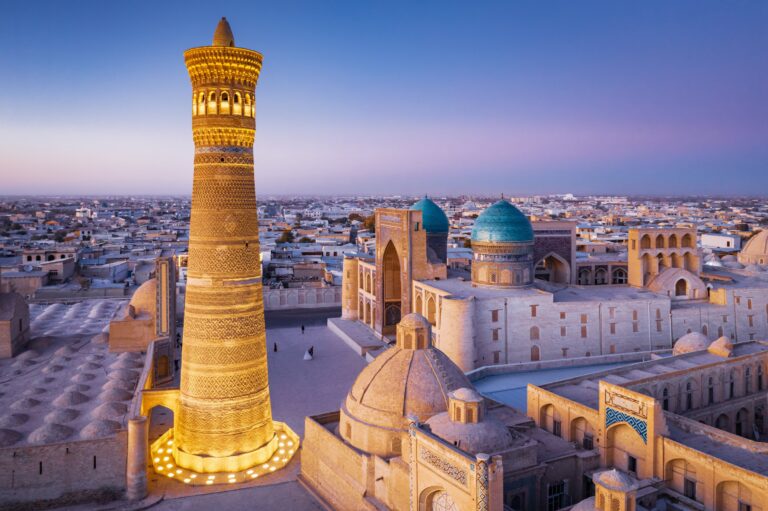
As a rising star in Central Asia, Uzbekistan has taken bold steps in sustainability, governance, education, and international leadership, reflecting a dynamic transformation that few could have predicted just a decade ago.
Uzbekistan’s Strategy 2030 is the plan behind it all, encompassing five core pillars: environmental sustainability, public administration reform, social transformation, national safety, and a future-focused outlook. President Shavkat Mirziyoyev’s , Strategy 2030 has become a blueprint guiding all parts of the Uzbek administration, with economic goals balanced against environmental and social needs.
Strong economic growth and global recognition
Last year was pivotal for Uzbekistan’s economy. With a record GDP of $100 billion, exports exceeding $24 billion, and gold and foreign exchange reserves reaching €38 billion, the country solidified its reputation as a reliable international partner.
At the Third International Investment Forum in Tashkent, May 2024, contracts worth $25.5 billion were signed, boosting the inflow of foreign investments. Advances in infrastructure and energy development, the creation of 1.5 million jobs, and progress in WTO accession talks with 22 countries, including the United States and China, have become the foundation for sustainable growth. Much of the growth and investment is attributed to the Mirziyoyev administration’s commitments to a more open economy and a much-improved business climate.
According to the Global Innovation Index for 2024, Uzbekistan’s economy is now ranked 10th among middle-income nations, up from 133rd a decade ago.
On course for a greener future
Over the past five years, Uzbekistan has commissioned 16 major solar and wind power plants with a total capacity of 3,500 megawatts or 10 billion kilowatt-hours. As a result, the share of green energy in the country’s energy system exceeded 16% in 2024, a major step towards the goal of 40% by 2030.
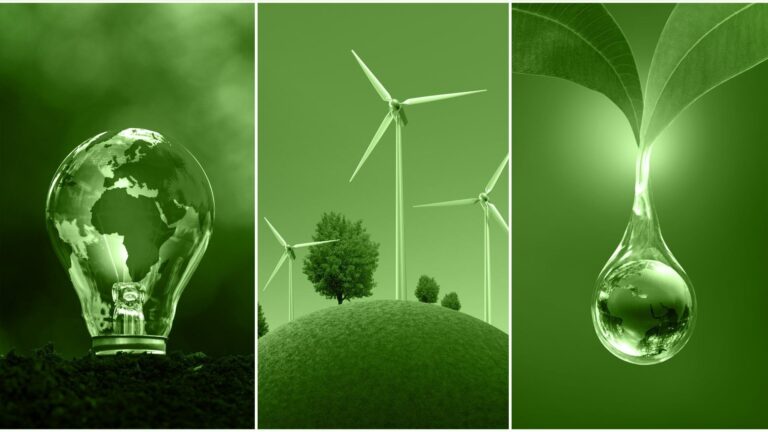
The national project “Yashilmakon” has already transformed the country: 138 million trees have been planted, “green belts” covering 10,000 hectares have been created, and 257 new parks have been opened. The “My Garden” initiative, which provided land leases to 10,000 residents, has not only improved the environment but also breathed new life into local entrepreneurship.
2024 also saw the implementation of water-saving technologies, which optimized irrigation across 1.8 million hectares. Further to this, international experts have highly praised Uzbekistan’s efforts in combating desertification. 2025 has been declared the Year of Environmental Protection, highlighting the country’s commitment to environmental leadership and preserving its natural heritage for future generations.
The state has strengthened social assistance to cover 2.2 million families, with programs introduced to support citizens with disabilities, increase employment, and provide modern prostheses. A World Bank-supported network of Innovative Social Protection System for Protection of Vulnerable People (INSON) social service centers has also been created.
In 2024, the Uzbekistan Art and Culture Development Foundation organized several significant events that emphasized the rich cultural heritage and the international role of the country in the field of art and culture. In April 2024, the exhibition “Uzbekistan: Avant Garde in the Desert” was held in the Italian cities of Florence and Venice.
Over four days in August last year, the 8th International Congress of the World Society for the Study, Preservation and Promotion of the Cultural Heritage of Uzbekistan was successfully held in Tashkent and Samarkand in partnership with the Center of Islamic Civilization of Uzbekistan under the motto “Heritage of Great Ancestors – the Basis of the Third Renaissance”.
And in September, the British Museum in London hosted the opening of the unique exhibition “Silk Roads,” which presented some of the rarest artifacts yet to be seen from Uzbekistan. The exhibition aroused great interest from the world community.
Uzbekistan’s higher education enrolment rate surged from 9% in 2016 to 42% in 2023, with a target to reach 50% by 2030.
This leap is backed by substantial government spending on education, which reached the equivalent of €4.5 billion in 2023, around 44% of annual social expenditure. This investment has launched a myriad of new initiatives, such as the establishment of international university branches and scholarships, particularly for women, which have broadened access to quality education and seen Uzbek universities rise in international rankings.
Educational reforms are also tightly interwoven with the country’s digital goals. Universities now offer specialized courses in artificial intelligence, data science, and blockchain technology, preparing the younger generation for a competitive global environment.
The “Digital Uzbekistan – 2030” program, initiated by President Shavkat Mirziyoyev, is positioning the country as a technological leader. IT service exports generated €326 million in revenue, while IT parks have become home to over 1,000 startups. The complete digitalization of elections through the “E-Saylov” system has elevated democratic processes to a new level of transparency.
With a vision to maintain momentum throughout 2025, Uzbekistan will implement large-scale reforms, strengthening its international standing and unlocking new opportunities for every citizen. The country is becoming a symbol of progress, inspiring other nations with its dynamism and ambition.
Content by https://www.cisc.uz/en/
Learn more about Uzbekistan’s development strategy and progress https://strategy.uz/